
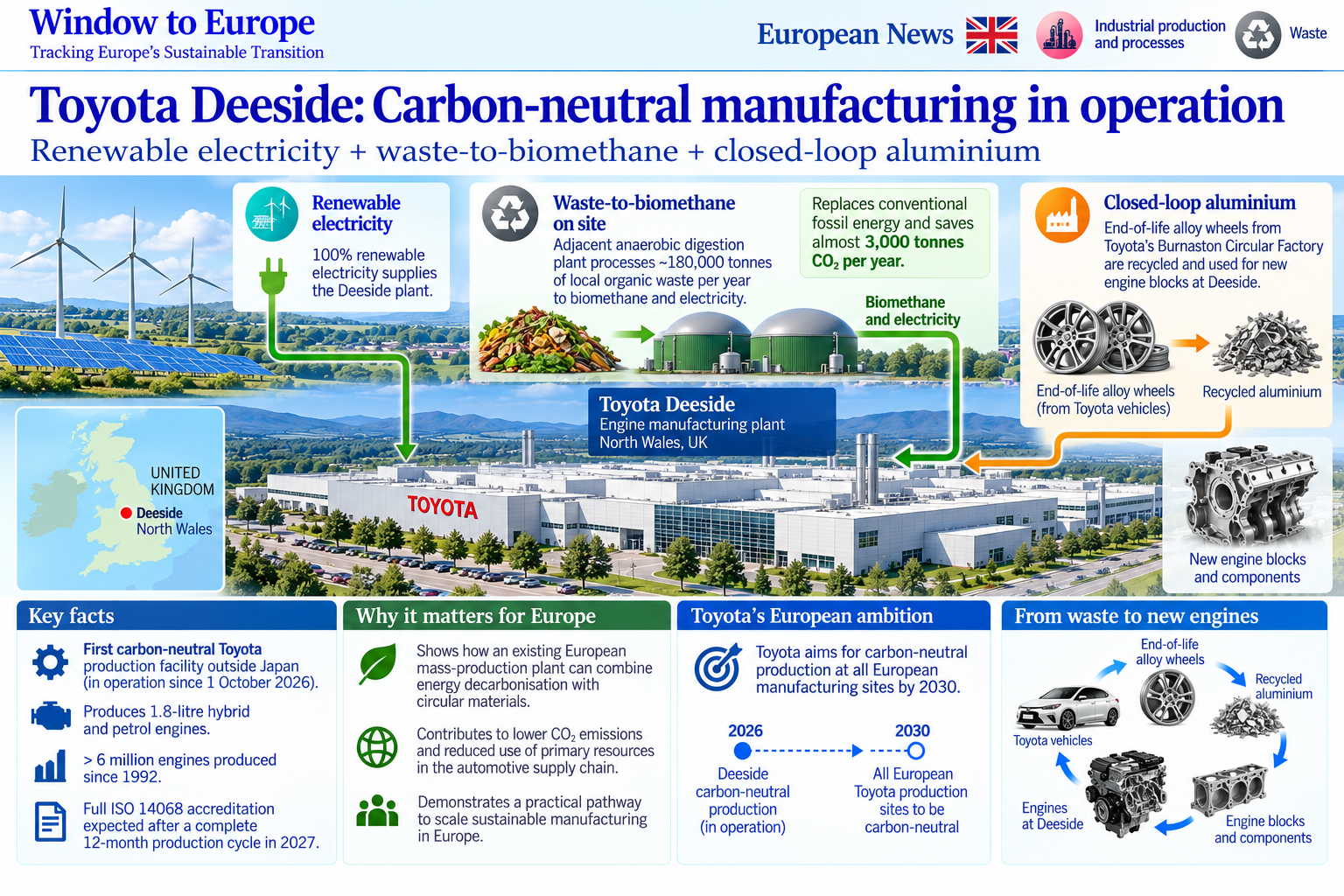
Renewable electricity, biomethane from local organic waste and recycled aluminium: Toyota shows how an existing European mass-production plant can combine decarbonisation with circular manufacturing.
Toyota has started carbon-neutral manufacturing operations at its engine plant in Deeside, North Wales – the first Toyota production facility outside Japan to reach this stage. The plant manufactures 1.8-litre hybrid and petrol engines and has produced more than six million engines since 1992.
A key element is an adjacent anaerobic digestion plant capable of processing around 180,000 tonnes of local organic waste per year. Biomethane and electricity are supplied directly to the Toyota plant, replacing conventional fossil energy and saving almost 3,000 tonnes of CO₂ annually. Deeside also operates with electricity from renewable sources and has eliminated waste sent to landfill.
The energy transition is complemented by a materials loop. Toyota’s Circular Factory at Burnaston recovers aluminium from end-of-life alloy wheels. The material is recycled and used at Deeside for new engine components, which return to Burnaston for installation in new vehicles. The first vehicle incorporating material from this circular route left the production line in March 2026.
Deeside therefore provides a practical example of how an existing European manufacturing site can combine renewable energy, waste-to-energy and closed-loop materials. Toyota aims to achieve carbon-neutral production at all its European manufacturing sites by 2030. Full ISO 14068 accreditation for Deeside is expected after completion of a 12-month production cycle in 2027.