
In brief
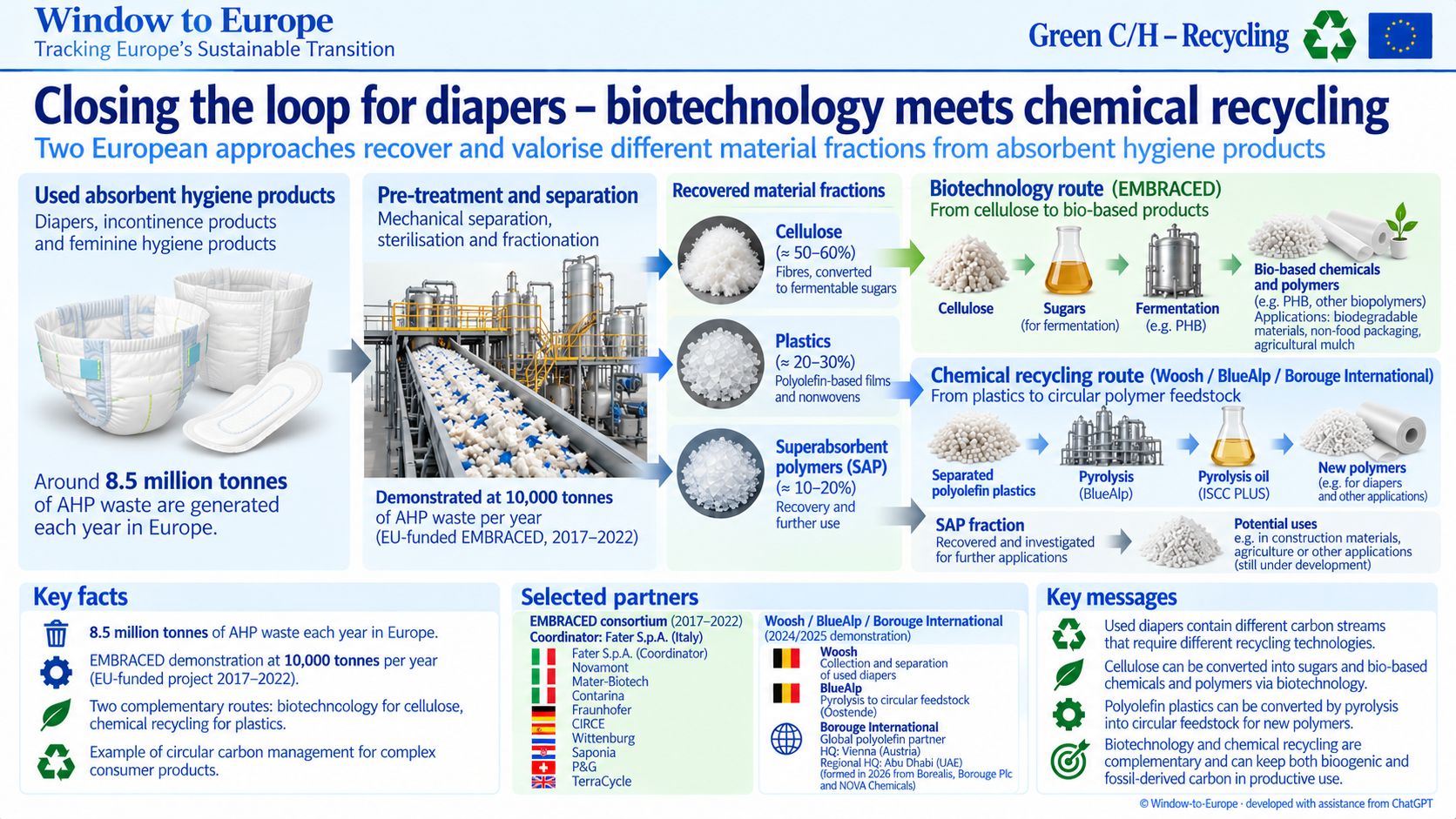
Used diapers contain several potentially valuable materials, but their complex composition makes recycling difficult. Two European approaches demonstrate complementary solutions: EMBRACED converts recovered cellulose into fermentable sugars and bio-based products, while Woosh and BlueAlp recover the plastic fraction and convert it by pyrolysis into feedstock for new polymers. Together, they illustrate how biotechnology and chemical recycling can address different carbon streams in the same waste product. Circular Bio-based Europe
One product – several carbon streams
Absorbent hygiene products (AHPs) such as diapers combine cellulose fibres, polyolefin-based films and nonwovens, and superabsorbent polymers (SAP). Their intimate combination and contamination after use make conventional mechanical recycling difficult.
The EU-funded EMBRACED project therefore started with mechanical pre-treatment and separation. Three high-purity fractions were recovered: cellulose, plastics and superabsorbent polymer. The important step was not simply recovering these materials, but developing separate routes for their further valorisation. CORDIS
Cellulose → sugars → biotechnology
For the cellulose fraction, EMBRACED demonstrated two value chains. Cellulose was first converted into second-generation fermentable sugars.
In Value Chain A, these sugars were converted into bio-based building blocks and subsequently biodegradable and compostable materials. The materials were tested for applications including non-food packaging and agricultural mulch. Circular Bio-based Europe
A second route used the cellulose-derived sugars as fermentation feedstock for polyhydroxybutyrate (PHB). Novamont developed the fermentation process at pilot scale together with downstream extraction and purification. PHB was subsequently evaluated as a component of biomaterials, while process co-products were investigated for biofertilisers and biostimulants. CORDIS
This is an interesting example of recycled carbon becoming biotechnology feedstock: instead of supplying fermentation with virgin sugar, carbohydrates already present in a consumer waste product are recovered and returned to a biological production process.
Plastics → pyrolysis → new polymer feedstock
A complementary approach is now being demonstrated in Belgium. Woosh operates a collection system for specially designed disposable diapers and mechanically separates the recovered materials. Its recycling facility, launched in 2025, already processes thousands of tonnes of used diapers annually. Borealisgroup (en-GB)
Together with BlueAlp and Borouge International, Woosh adapted the plastic fraction to meet the feed specifications of BlueAlp’s chemical recycling process in Oostende. The polyolefin-rich material is subjected to pyrolysis, producing a liquid hydrocarbon feedstock.
According to the companies, the resulting pyrolysis oil is ISCC PLUS-certified and meets the specifications for further conversion into new polymers, including polymers suitable for diaper applications. The first recycling runs have been carried out at industrial scale. Borealisgroup (en-GB)
Importantly, this is not simply mechanical recycling of diaper plastic. Mechanical separation provides a sufficiently defined feedstock; chemical recycling then converts the polymer carbon back into hydrocarbon raw material.
Biotechnology and chemistry are complementary
The two approaches address different fractions of the same difficult waste stream:
Cellulose → sugars → fermentation → bio-based building blocks / PHB
Polyolefin plastics → separation → pyrolysis → circular hydrocarbon feedstock → new polymers
The remaining SAP fraction represents another potential material stream. EMBRACED demonstrated recovery of this fraction and investigated routes for further use, although its circular pathway is less developed than those for cellulose and plastics. Circular Bio-based Europe
This makes used diapers an unusually illustrative example of circular carbon management. There is no single recycling technology capable of handling the complete product. Instead, mechanical separation, biotechnology and chemical recycling have different but complementary functions.
From waste treatment to carbon management
The wider lesson goes beyond diapers. Complex consumer products frequently contain both biogenic carbon and fossil-derived polymer carbon. Keeping these carbon streams in productive use therefore requires different technologies.
EMBRACED demonstrates how recovered biogenic carbon can enter a fermentation-based value chain. Woosh and BlueAlp show how difficult-to-recycle polymer carbon can be returned to petrochemical production as a secondary feedstock. Neither route alone closes the complete material loop, but together they point towards a more differentiated approach to circular carbon.
The collaboration adds an industrial dimension. Borouge International, headquartered in Vienna with a regional headquarters in Abu Dhabi, was formed in 2026 through the combination of Borealis, Borouge Plc and NOVA Chemicals. Together with BlueAlp, it defined the quality requirements that recovered diaper plastics must meet for chemical recycling and subsequent use as feedstock for new polymers.
From waste to carbon feedstock:
separate first – then apply the recycling technology appropriate to each material fraction.
Sources
CORDIS – EMBRACED final reporting
Borealis – Woosh, Borouge International and BlueAlp circular pathway for diaper plastics