
In brief
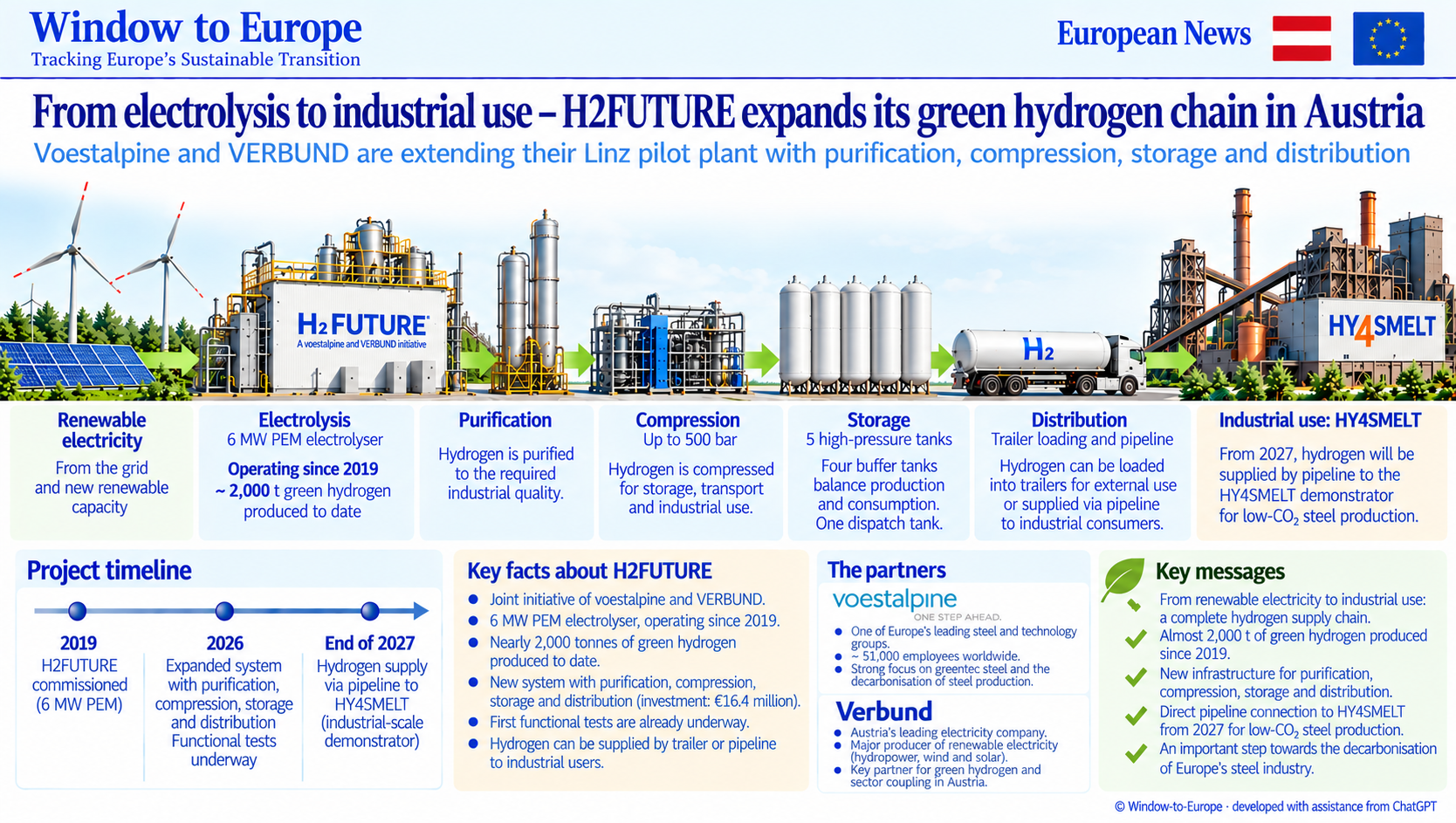
After almost 2,000 tonnes of green hydrogen produced since 2019, voestalpine and VERBUND are expanding H2FUTURE in Linz from electrolysis to a complete hydrogen supply chain – including purification, compression, storage and industrial use.
The H2FUTURE pilot plant at voestalpine’s steelworks in Linz is entering a new phase. Since its commissioning in 2019, the 6 MW PEM electrolyser has produced almost 2,000 tonnes of green hydrogen and has been used to investigate both industrial hydrogen production and flexible operation in response to fluctuations in the electricity grid. Voestalpine
Now voestalpine and Austrian energy company VERBUND have expanded the facility beyond hydrogen production. A new system adds purification, compression, storage, loading and distribution, allowing the partners to investigate the complete chain between renewable electricity and industrial hydrogen use. The expansion represents an investment of €16.4 million, and first functional tests are already underway. Voestalpine
Hydrogen from the electrolyser can be compressed to up to 500 bar. Five new storage tanks have been installed: four are designed to balance fluctuations between hydrogen production and consumption, while a fifth serves as a dispatch tank. Hydrogen can also be loaded into trailers for use by external research and industrial projects. Voestalpine
The next step: hydrogen enters steelmaking
The most interesting connection is being prepared only about one kilometre away. From the end of 2027, H2FUTURE is scheduled to supply hydrogen directly by pipeline to HY4SMELT, the industrial-scale demonstration plant currently under construction at the Linz site. Voestalpine
HY4SMELT will combine hydrogen-based direct reduction of ultrafine iron ores with an electric smelting process. Construction is already well advanced, including the approximately one-kilometre hydrogen pipeline linking the demonstrator to H2FUTURE. Commissioning is planned for the end of 2027. Voestalpine
Why this matters
Many hydrogen projects concentrate on the electrolyser itself. H2FUTURE increasingly addresses the less visible infrastructure required between hydrogen production and actual industrial use: gas quality, pressure, buffer storage, transport and continuous supply.
The project therefore illustrates a transition from demonstrating green hydrogen production towards testing an integrated industrial hydrogen supply chain.
W2E assessment: H2FUTURE has moved beyond an electrolyser demonstration. Its new significance lies in connecting several already tangible components – production, purification, compression, storage and distribution – with a future industrial consumer. The direct link to HY4SMELT from 2027 could turn the Linz site into an unusually complete European demonstration environment for hydrogen-based steelmaking.
Source: voestalpine / VERBUND, 2 October 2026. Voestalpine